
Explainers · 8 min read ·
How browser games actually work in 2026
Canvas, WebGL, WebAssembly and the game loop: a non-technical explanation of what happens when a browser game loads.
A modern browser game is a web page that draws sixty pictures a second. That is genuinely all it is — but the machinery underneath got remarkably good, and it is worth knowing why some games load in one second and others take fifteen.
Rendering happens on a canvas element. Simple 2D games paint shapes and sprites directly; anything 3D hands the work to WebGL, which talks to your graphics card through the same pipeline a native game uses. That is why a browser can now run a driving game with real lighting.
The logic is JavaScript, or increasingly WebAssembly — compiled C++, C# or Rust running at near-native speed inside the browser's sandbox. Engines like Unity and Godot export to exactly this, which is how full studio games end up in a tab.
The picks
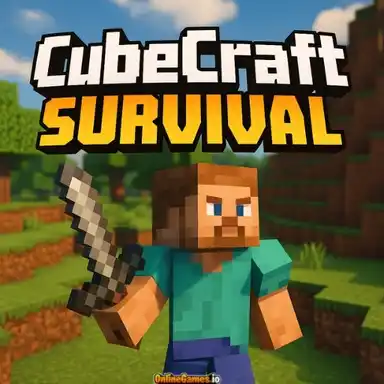
1. CubeCraft Survival
A WebGL world with chunk streaming — watch how terrain appears as you move.
Play CubeCraft Survival
2. GTA Simulator
An open world in a tab. Notice the initial load is long and everything after it is instant: that is asset caching.
Play GTA Simulator
3. Geometry Arrow
A 2D canvas game that loads in under a second — the other end of the spectrum.
Play Geometry Arrow
4. Masked Special Forces
3D shooting with pointer lock, the browser API that hides your cursor and gives games raw mouse input.
Play Masked Special Forces
The practical takeaway: load time is dominated by asset size, not by the browser. A 2D puzzle game is a few hundred kilobytes; a 3D world is tens of megabytes and will feel slow the first time and fast afterwards, because your browser keeps the files.
It also explains why these games do not need installing. There is no binary to trust — the browser sandbox is the security model, and the worst a page can do is use your GPU for a while.
Frequently asked
- Do browser games need Java or Flash?
- No. Both are gone. Modern browser games use HTML5, WebGL and WebAssembly, which are built into every current browser.
- Why is the first load slow and the second fast?
- The browser caches the game's assets. The second visit reads them from your disk instead of the network.


